Espoo Museum of Modern Art
Gerda Thesleff
Mobile Guide
Plant and flower motifs
Gerda Thesleff often decorated her works with plant, flower and fruit motifs. She loved the outdoors and enjoyed taking walks, especially around her summer home in Murole, western Finland, and during her travels in Italy. She picked berries, mushrooms and flowers, and sometimes went fishing. Wild nature inspired Thesleff’s style, which can be described as fresh and free. Historically, flowers had been dismissed as trivial subjects associated with women, but at the turn of the century they also became a means of powerful expression and symbolic rebellion. Thesleff was no meticulous porcelain painter: her bold, vigorous flower and plant motifs are charged with emotion. This was one reason why both the public and critics sometimes struggled to understand her work.
Dance and vitalism
In the early 20th century, Gerda Thesleff and her sister Ellen became fascinated with vitalism while in Italy, a fashionable lifestyle movement of the time. Vitalists sought to break away from urban culture and live in an intense relationship with the natural world. According to vitalist ideals, the aim of human life was to free oneself from the constraints imposed by culture and modern ways of thinking and to reconnect with more elemental, embodied ways of being in the world. People were encouraged to live without restrictive clothing, hairstyles, conventions, or gestures. This vitalist ideal of women’s free movement can also be seen in two works by the sisters: a plate by Gerda (undated), depicting a woman holding a ball, and Ellen’s woodcut Chopin’s Waltz (undated).
Landscapes and architecture
Thesleff made several trips to Italy with her sister Ellen. They sketched together outdoors, particularly in the area around Florence. Thesleff later used these landscape sketches as decorative motifs on the wheel-thrown vases, bowls and platters she made in Finland. Her imagery centres on villages nestled in the hilly Tuscan landscape, medieval fortifications, churches and chapels. Her interest in architectural subjects sets her apart from ceramic artists both of her own time and today. Florence was an international hub for artists, and Thesleff also drew inspiration for her ceramic works from the visual arts, including the work of French painters Henri Matisse (1869–1954) and Paul Cézanne (1839–1906).
Techniques and materials
In 1902, Gerda Thesleff began studying under the artist A. W. Finch in the newly established ceramics department of the Central School of Applied Arts in Helsinki. The department used locally sourced red clay. Thesleff learned to throw on a heavy kick wheel, which was ill-suited to women working in long skirts. Until then, wheel-throwing had been exclusively men’s work, and Thesleff was among the first women ceramic artists to throw her own pieces. She decorated her works with engobes* and metal oxides**, often applying them by painting. The pieces were glazed with lead-based glazes and fired in the school’s wood-fired kiln. In the 1920s, Thesleff worked for a few years at Arabia, Finland’s leading ceramics factory, where she used pale faience bodies and industrial colours, which produced considerably brighter hues than the colours she had used previously.
* Coloured liquid clay that can be used to paint the surface of an object before bisque firing.
** Mineral compounds containing metals that produce a range of colours and surface effects in ceramics during firing.
Italy
Travel and study abroad were part of life for women artists at the turn of the 20th century. Gerda Thesleff first travelled to Italy in 1897. This marked the beginning of a new, mobile and international way of life for her and her sister Ellen, which continued until the First World War. In the 1920s and 1930s, they returned to Florence four more times.
Compared with Helsinki, Florence was liberal and bohemian. Its streets and cafés offered foreign women, too, the freedom to wander at leisure and soak up the modern world around them. The sisters were surrounded by a fascinating international network of artists and thinkers. Their most important colleague was the English theatre practitioner Edward Gordon Craig (1872–1966).
Portrait
Ellen Thesleff painted many portraits of her sisters. These two works portray Gerda as a young woman and in middle age. They show how, over the decades, Ellen explored her sister’s character and presence.
In the tranquil 1889 portrait, Gerda is 18 years old, dressed in pink with her hair in braids. She is shown reading on a bed, cultivating her mind. In the second portrait (1913), which is also on display in the exhibition, Gerda’s individuality comes more strongly to the fore, as does the modern artist’s personal interpretation of her sister. The bourgeois domestic setting has given way to an abstract environment. The woman resembles an ancient goddess: alert, inward-looking and contemplative.
Murole
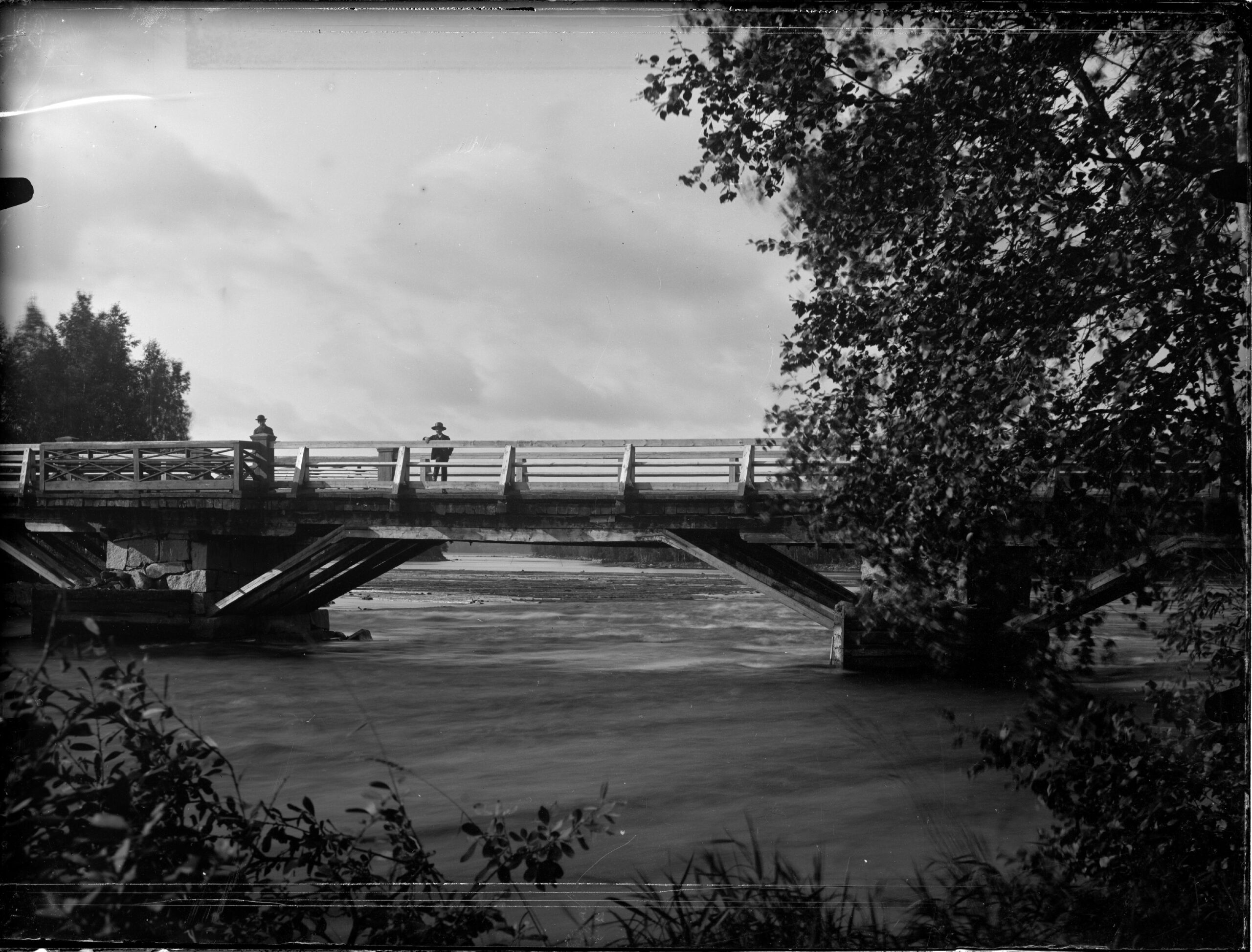
The Thesleff family fell in love with the scenery and rich fishing waters of Murolekoski in Ruovesi, western Finland, as early as 1888. A villa built later on the banks of the rapids was named Casa Bianca, the white house. For decades, the summer home and its gardens provided the entire family with a setting for both rest and work. From their youth onwards, Gerda and Ellen spent almost every summer of their lives in Murole. They wandered through the surrounding landscape, fished and drew inspiration from the area for their artistic work. The landscapes of Murole found their way into the work of both sisters.
Women artists in an age of modernisation
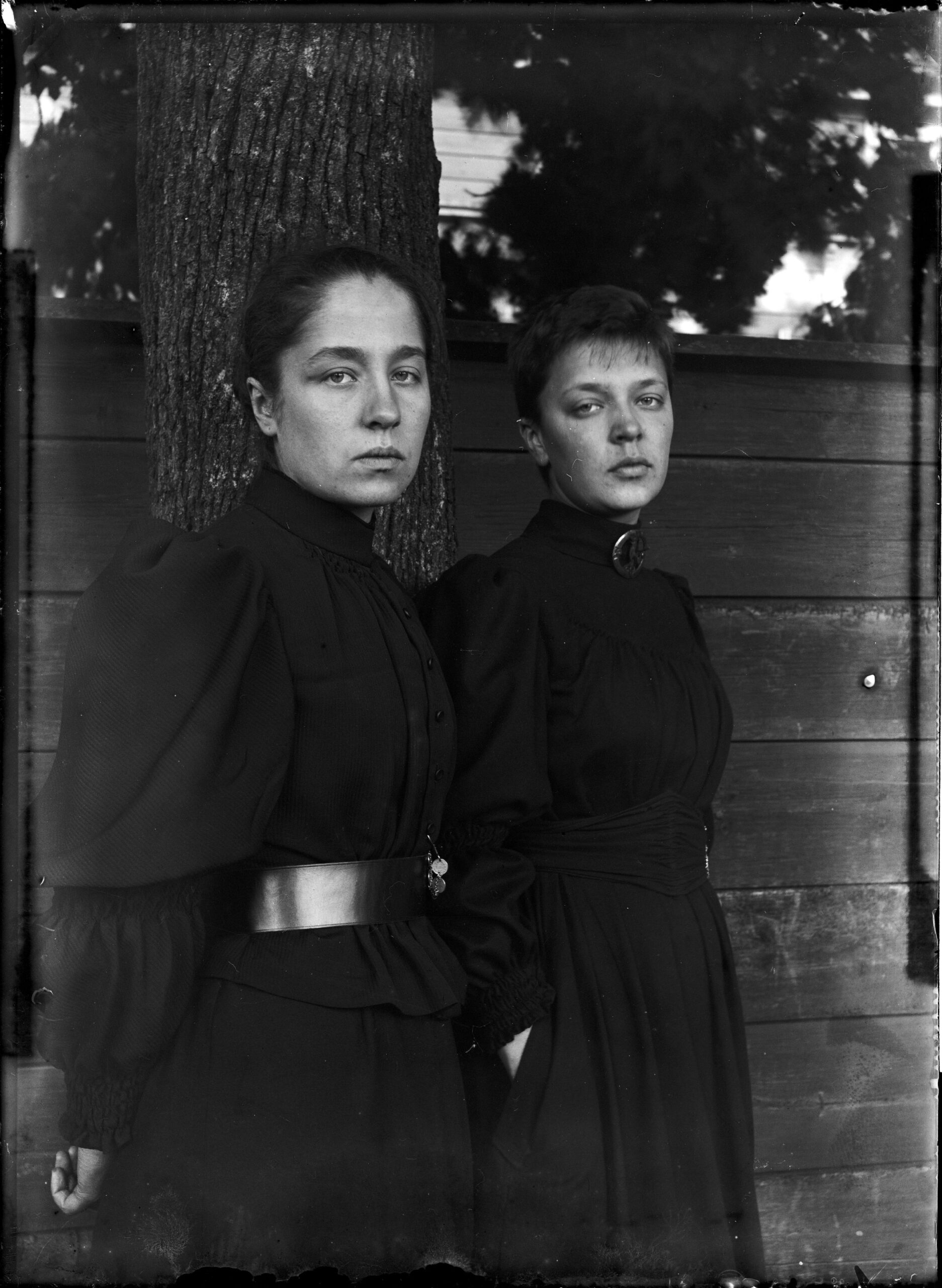
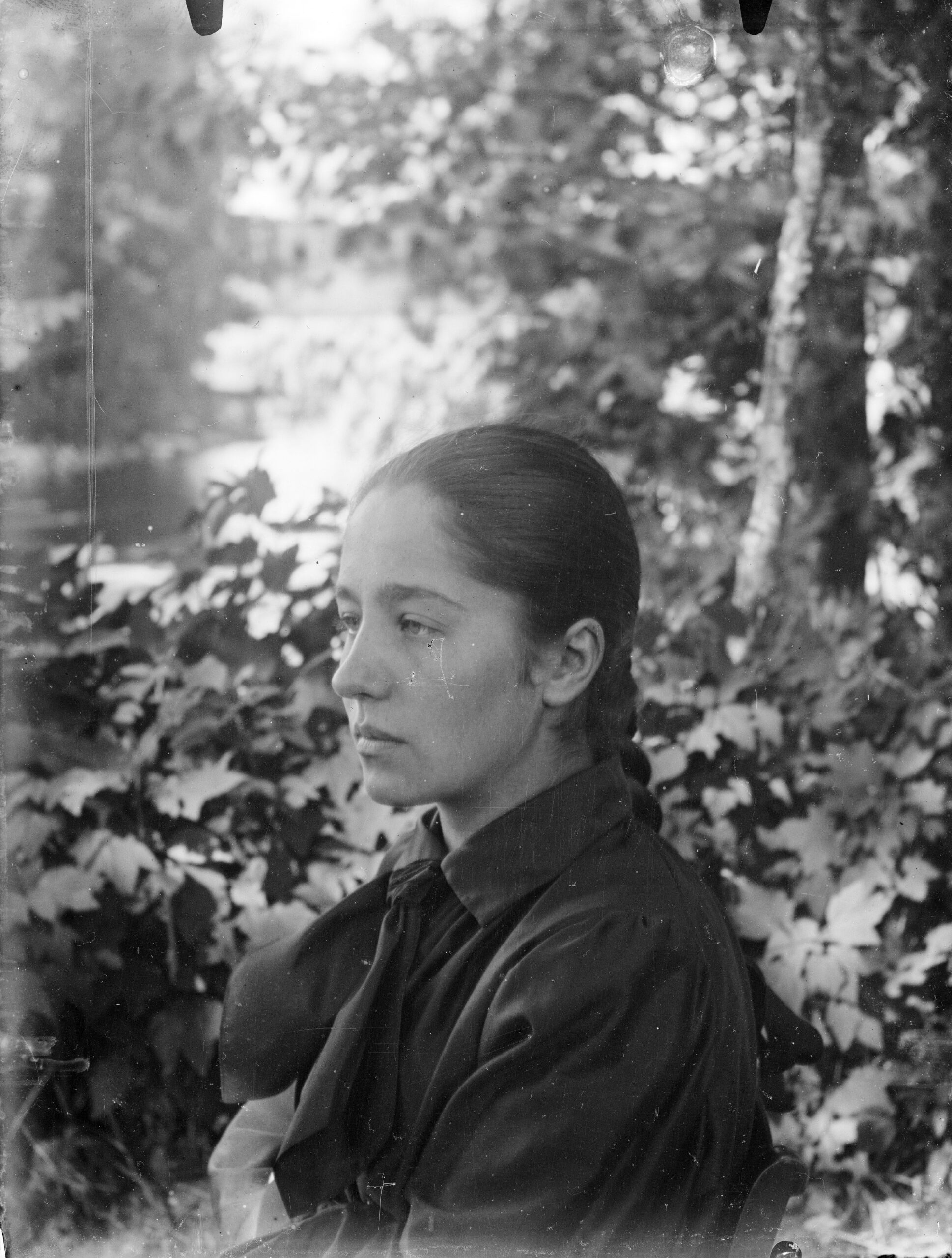
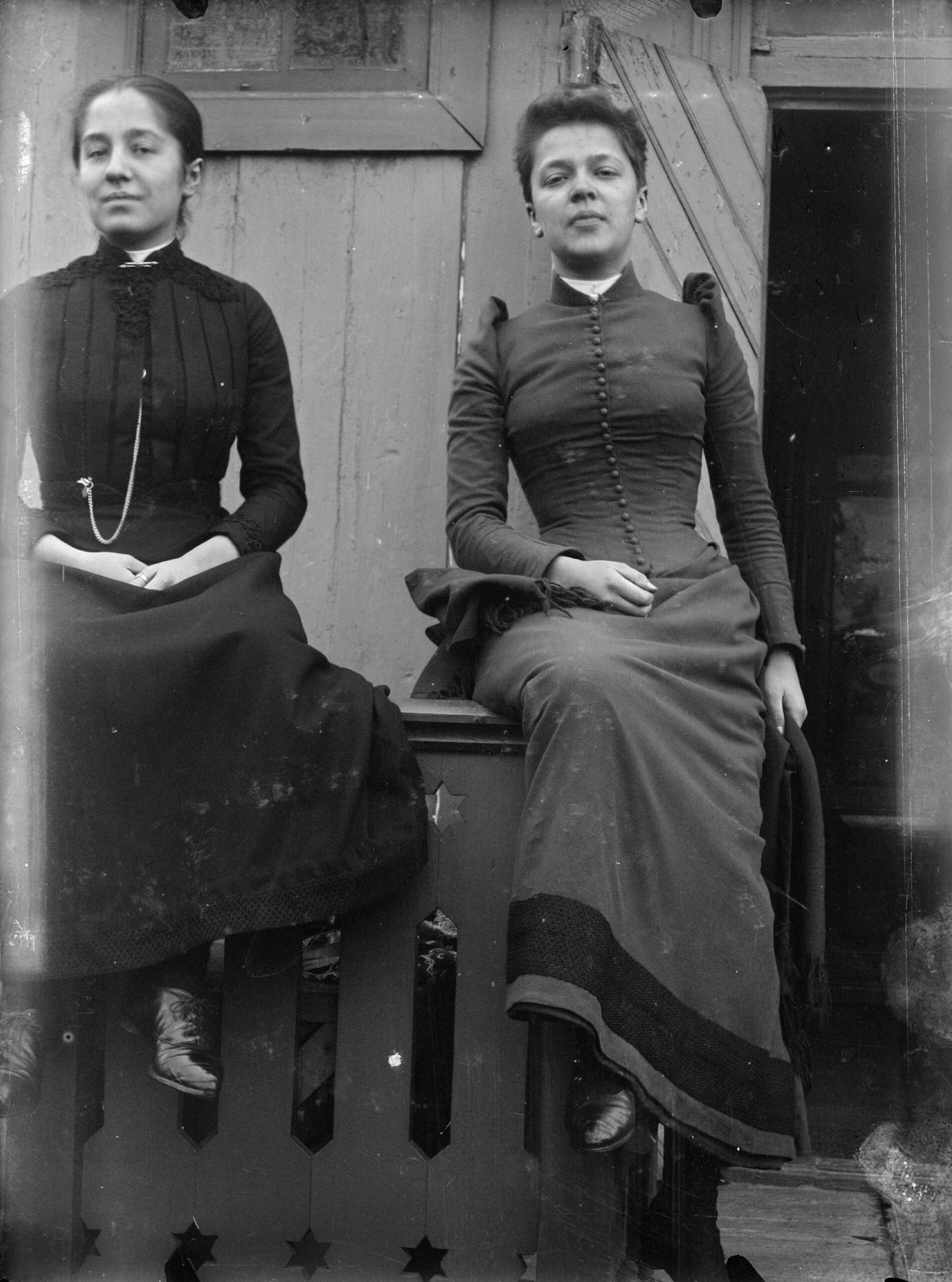
Gerda Thesleff grew up in a family with liberal values, where the daughters were encouraged to pursue artistic careers. This was far from typical at the time, when women’s aspirations, independence and artistic voices were seen as a threat to existing social structures. Finnish art of the late 19th and early 20th centuries was dominated by a male perspective, and the heroes of national art were men. Women artists had to forge their own paths based on their own experiences and form networks that would support their careers. For Gerda Thesleff, her most important source of support was her painter sister Ellen. Through their own networks, women were able to navigate the art world of the fin de siècle, or turn of the century.
Experiments at the Arabia factory
Gerda Thesleff worked at Arabia, Finland’s leading ceramics manufacturer, from 1922 to 1924. There, she had access to the resources of industrial-scale ceramics production, including technical expertise and a range of imported materials. This large bowl (1922−24) was wheel-thrown using Arabia’s pale faience body. While the clay was still soft, Thesleff shaped the rim into a rectangular form.
The bowl was fired at around 1,100°C, but the clay body did not fully vitrify and remained porous. As a result, the glaze developed a network of fine cracks, known as crazing. At the factory, Thesleff had access to bright industrial colours, which she used liberally in the bowl’s exceptionally colourful brush-painted decoration.
Art ceramics for everyday use
In Gerda Thesleff’s time, the general public was familiar with two types of ceramics: traditional red-clay household wares made by local potters, and industrially mass-produced tableware, either imported from abroad or manufactured at the Arabia factory. Thesleff’s ceramics represented something entirely different.
When working with clay, she was first and foremost an artist. She never repeated herself, and every piece is unique. Thesleff embraced the element of chance inherent in ceramic techniques and the firing process, while her free and spontaneous expression challenged the established aesthetic conventions of her time. Her artistic experiments also occasionally found their way into everyday use in the Thesleff family home.
Decorative techniques
Gerda Thesleff’s functional objects combine a wide variety of forms and decorative motifs with an element of surprise. After gaining access to pale faience clay at the Arabia factory, she began experimenting with new decorative techniques of her own: she combined sgraffito*, relief decoration and the inlay technique of intarsia** using differently coloured clays. In this respect, too, Thesleff was a pioneer of Finnish ceramics.
The lidded boxes on the dressing-table mirror are examples of an inlay technique developed by Thesleff. She first incised the outlines of the image into the slightly dried clay surface and then pressed darker clay of a different colour into the grooves. After finishing the surface, for example by smoothing it with a thin metal spatula, the image emerged with clearly defined outlines. A similar technique, known as mishima, is also found in Japanese ceramics.
* A technique in which designs are created by scratching or carving through the surface to reveal the colour beneath.
** A technique in which a design carved into the surface of the clay is filled with clay or slip (liquid clay).