Espoo Museum of Modern Art
Mobile guide to the Dialogues exhibition

The exhibition features works from the Saastamoinen Foundation art collection that engage in free dialogue with one another, encouraging visitors to compare and draw parallels between them. The exhibition is an invitation to engage in dialogue or conversation, that will hopefully foster myriad interpretations. This mobile guide introduces you to some of the artists in the Dialogues exhibition.
Al Qadiri, Monira
BENZENE FLOAT (Propane)
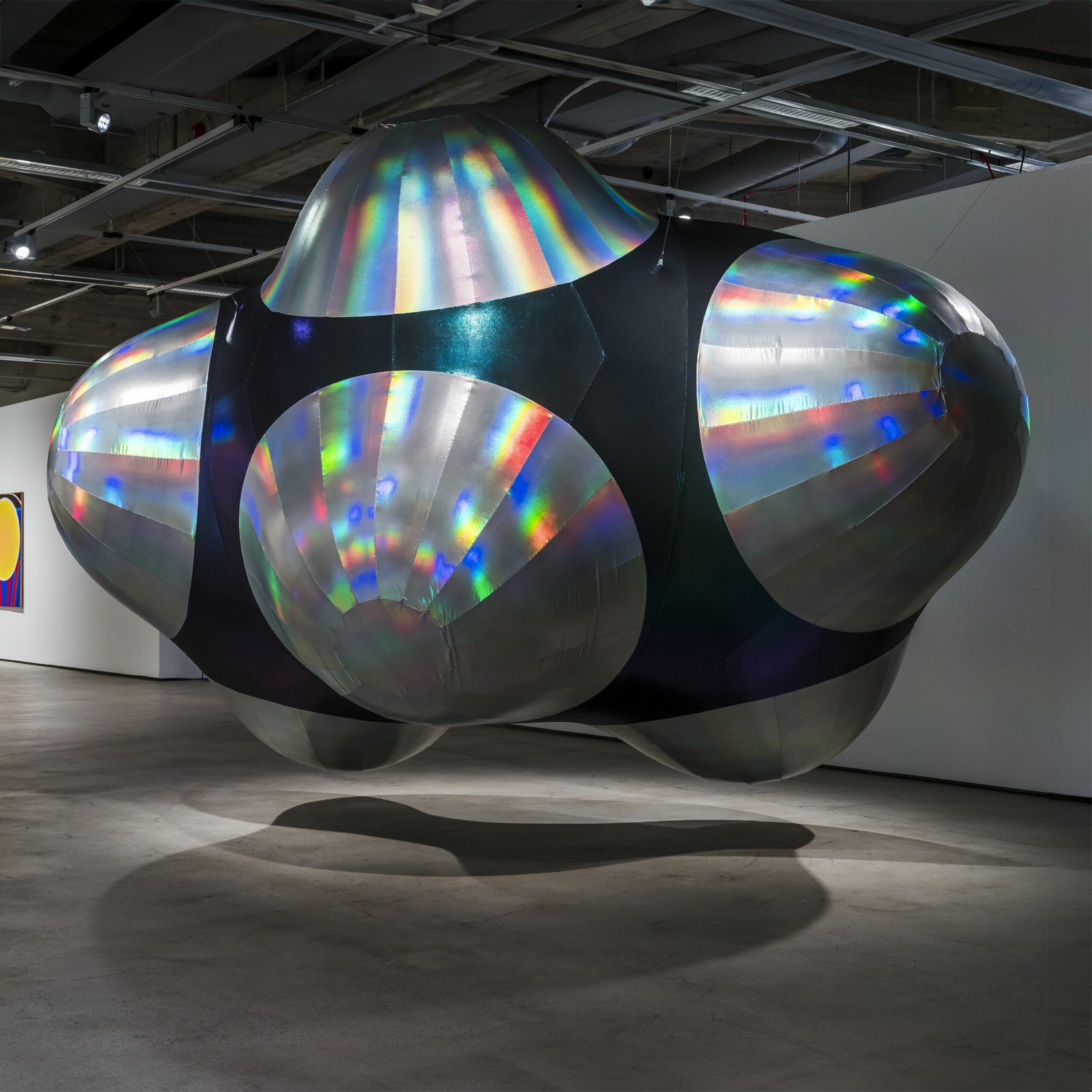
The molecular structure of propane is inflated to gigantic proportions in this inflatable sculpture BENZENE FLOAT (Propane) (2023) measuring over four metres in length. Propane is a gas obtained by distilling crude oil. It is used in various household products and industrial processes. The sculpture is from the BENZENE FLOAT series, Monira Al Qadiri’s (b. 1983) critical inquiry into the oil industry. Fuels, asphalt, plastics and other petrochemicals are invisibly integrated into our everyday lives. Our modern lifestyle is fuelled by oil, but oil is also a key cause of the climate crisis.
Asawa, Ruth
Paul
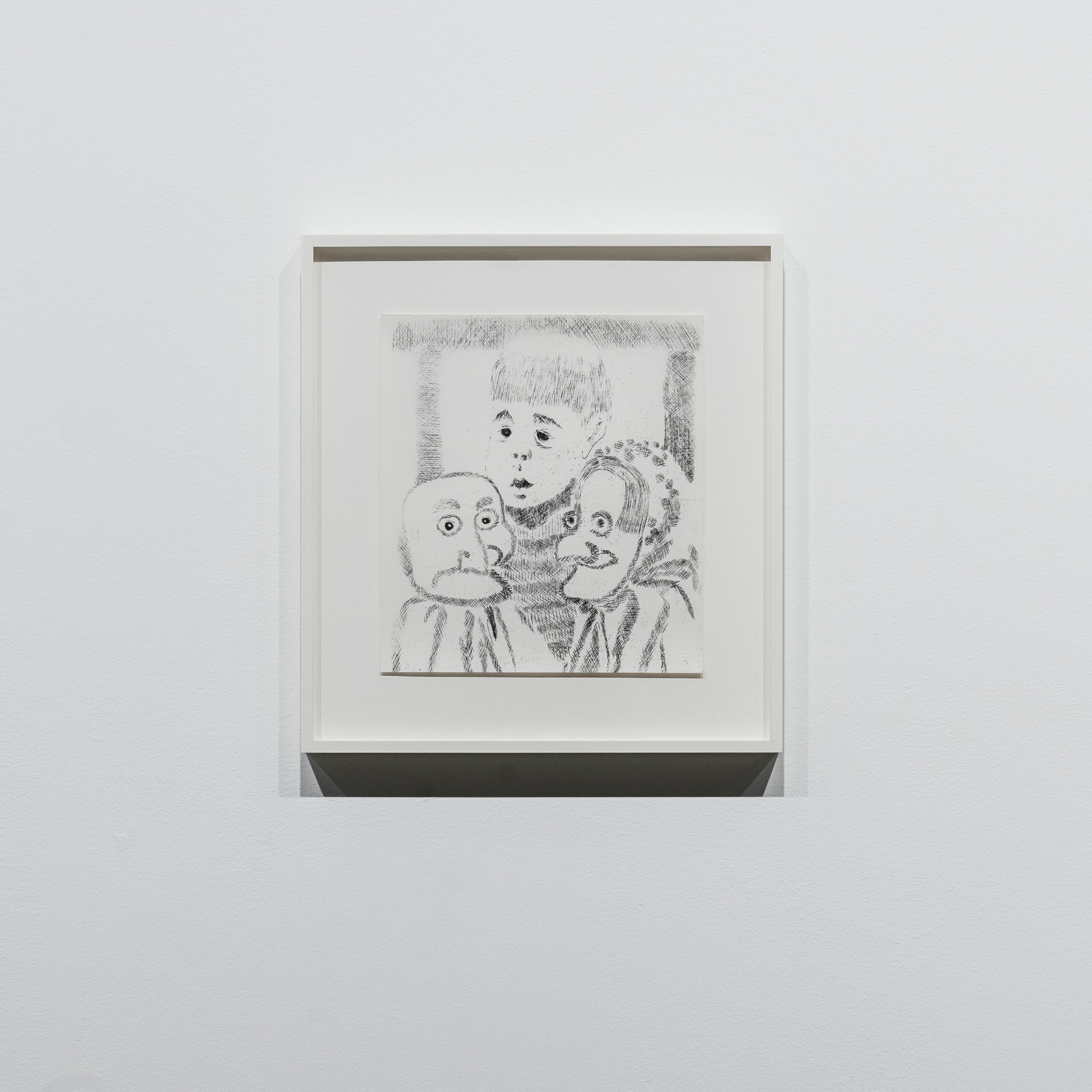
Ruth Asawa (1926–2013) initially achieved acclaim for her distinctive sculptures looped woven from metal wire. She branched out into lithography in 1965 after receiving a fellowship at joining the Tamarind Lithography Workshop founded in Los Angeles by June Wayne. Her time at Tamarind marked her longest ever separation from her family. Family members appear in many of her lithographs, but the artist’s primary focus is not so much portraiture as the study of line, texture and the printmaking process. Paul (1965) depicts Asawa’s youngest child flanked by two doll-like figures.
Bourgeois, Louise
Topiary: The Art of Improving Nature
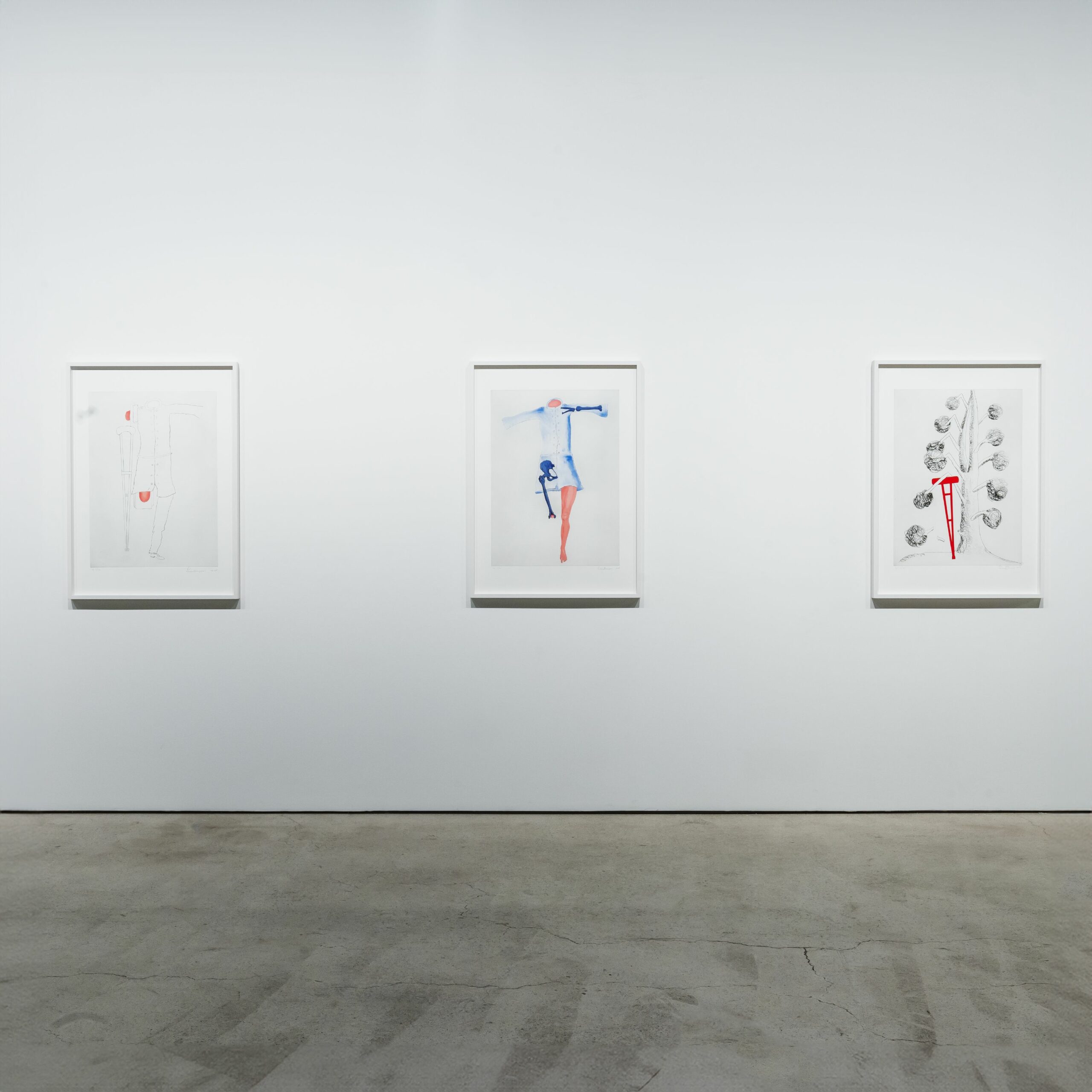
Louise Bourgeois´s (1911–2010) art deals with deeply personal themes. In the print portfolio Topiary: The Art of Improving Nature (1988), she pairs depictions of body parts, crutches, and amputees with imagery from the natural world, a lifelong preoccupation. Topiary is the horticultural practice of shaping plants into ornamental forms by clipping and limiting their natural growth. The seemingly violent human interventions ultimately make the tree stronger, a concept Bourgeois connected to the many hardships she suffered and survived. Bourgeois worked in the mediums of painting, sculpture, installation and graphic art. She took up printmaking in the late 1940s, when she frequented the renowned Atelier 17 printshop in New York and worked on a small printing press at home. In the late 1980s, she returned to the medium in earnest, and created several print portfolios, books, and editions until the end of her life.
Cuffie, Curtis
Untitled

Curtis Cuffie (1955–2002) is best known for his ephemeral sculptures and installations created on the streets of New York’s East Village during the 1980s and 1990s. Experiencing periods of homelessness, Cuffie worked with found materials such as broken furniture and discarded clothing to construct towers, altars, and assemblages reminiscent of festive or ceremonial processions along sidewalks, fences, and building façades. While many of these transient works were lost to city cleanups and inclement weather, they also gained recognition in New York galleries and art publications.
Elmgreen & Dragset
Powerless Structures, Fig. 101

Elmgreen (b. 1961) & Dragset (b. 1969) are a Berlin-based artist duo who have collaborated since 1995. Powerless Structures, Fig. 101 (2012), a statue of a young boy riding a rocking horse, is Elmgreen & Dragset’s take on traditional equestrian statuary. In 2012, a larger bronze version of the sculpture was installed on the Fourth Plinth in Trafalgar Square, London for 18 months. Trafalgar Square was designed to commemorate the British navy’s victory at the Battle of Trafalgar during the Napoleonic wars. By portraying a child at play on a toy from the same era, the artists contrast the innocence and imagination of youth with the heroic monuments on the square that celebrate military triumph and power.
EXPORT, VALIE
Aktionshose: Genitalpanik (Action Pants: Genital Panic)

In 1968, VALIE EXPORT (1940–2026) staged a provocative performance in a Munich cinema, wearing crotchless trousers and walking among the seated audience. This radical feminist act directly confronted conventional portrayals of the female body as a passive, controlled object of the cinematic gaze. The following year, Peter Hassmann took a series of staged images of the same performance. In these images, EXPORT brandished a machine gun as a symbol of her agency and defiance.
Halaby, Samia
Foldgrow 6
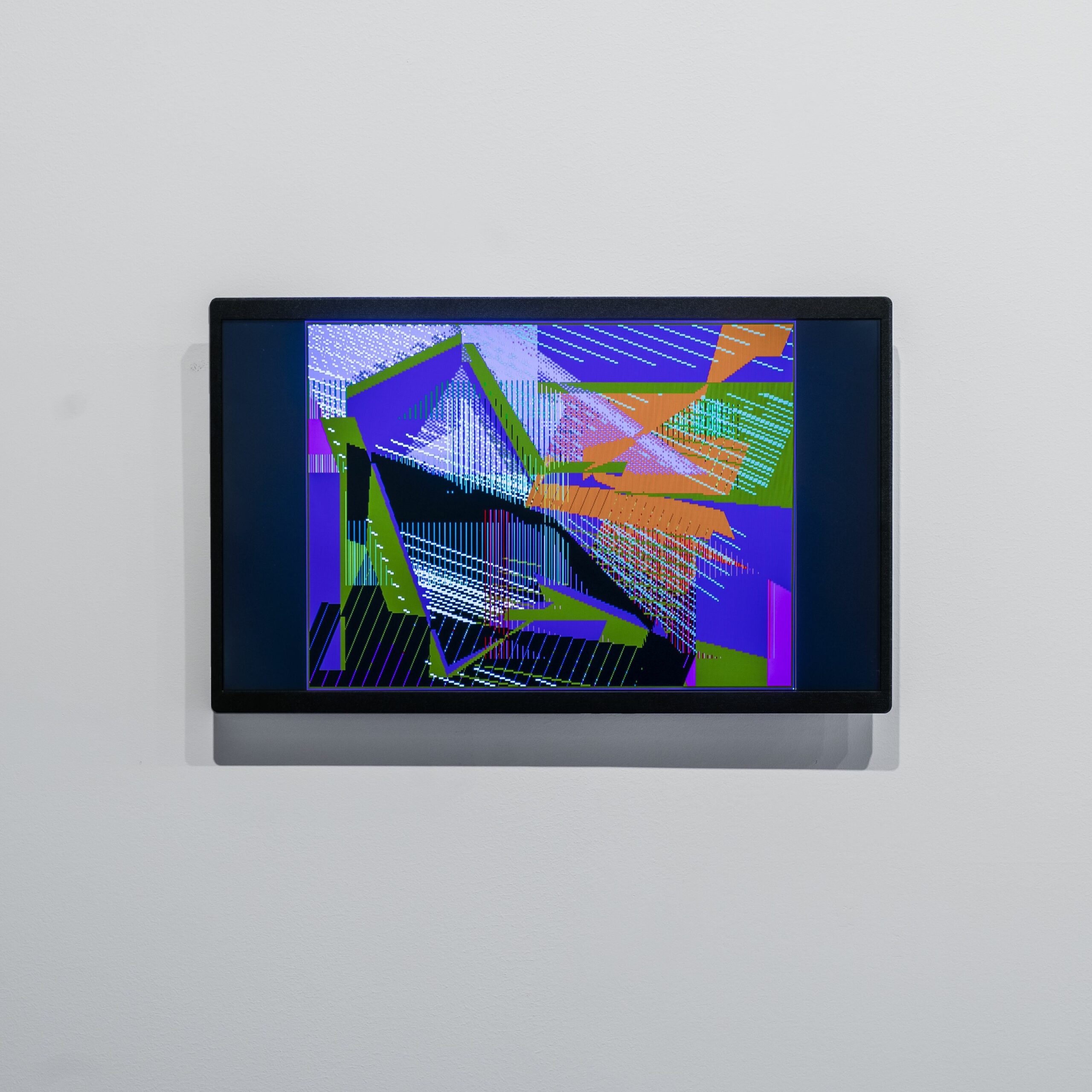
Samia Halaby (b. 1936) is an abstract painter. Through colours and shapes, she has been studying natural phenomena such as growth and change since the 1960s. In Foldgrow 6 (1987), the familiar elements of her oil paintings appear in motion. The digital work is part of a wider series programmed by the artist on an Amiga computer. Though not widely shown in the 1980s, Halaby is now recognized as a pioneer of Computer art.
Palestinian-born Halaby remains active on the art scene to this day, and she is also a political activist and scholar. She has been based in the United States since 1951 after fleeing Jerusalem with her family aged eleven in 1948.
Kganye, Lebohang
From the series Her-Story

Lebohang Kganye (b. 1990) is a South African artist whose work frequently explores themes of identity, family history, and cultural heritage. The titles Kwana Germiston bosiu II (Night in Germiston II), Re tantshetsa phaposing ya sekolo I (We are dancing in classroom I) and Hlakeng ya kereke II (Inside the Church II) are in Sesotho, referencing the settings depicted in the photographs. The images form part of a larger series in which Kganye reflects on her relationship with her late mother through archival family photographs. Seeking to preserve her mother’s memory in a deeper form than a static image, Kganye dressed in her mother’s old clothing and recreated her poses in the original locations. She then digitally merged her own image with the vintage photographs, weaving past and present into a single frame.
Korman, Harriet
Untitled
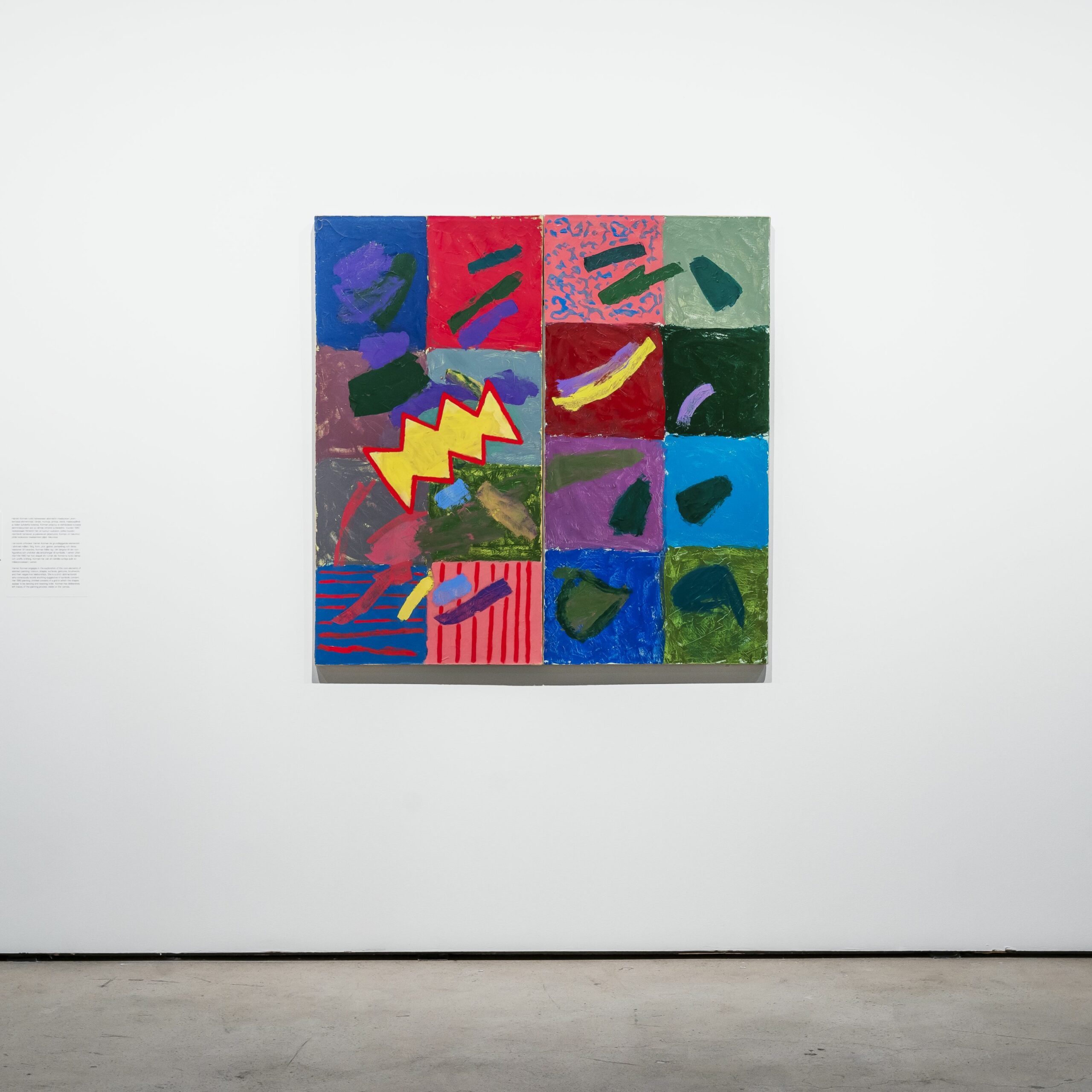
Harriet Korman (b. 1947) engages in the exploration of the basic elements of abstract painting: colours, shapes, surfaces, gestures, brushwork, and their respective relationships. She is a strict abstractionist who consciously avoids anything suggestive of symbolic content. Her 1984 painting Untitled consists of a grid in which the shapes appear to be dancing and resisting order. Korman has deliberately left traces of the painting process visible on the canvas.
Ołowska, Paulina
Disco Ofelia and Eleuter House (after Jarosław Iwaszkiewicz)
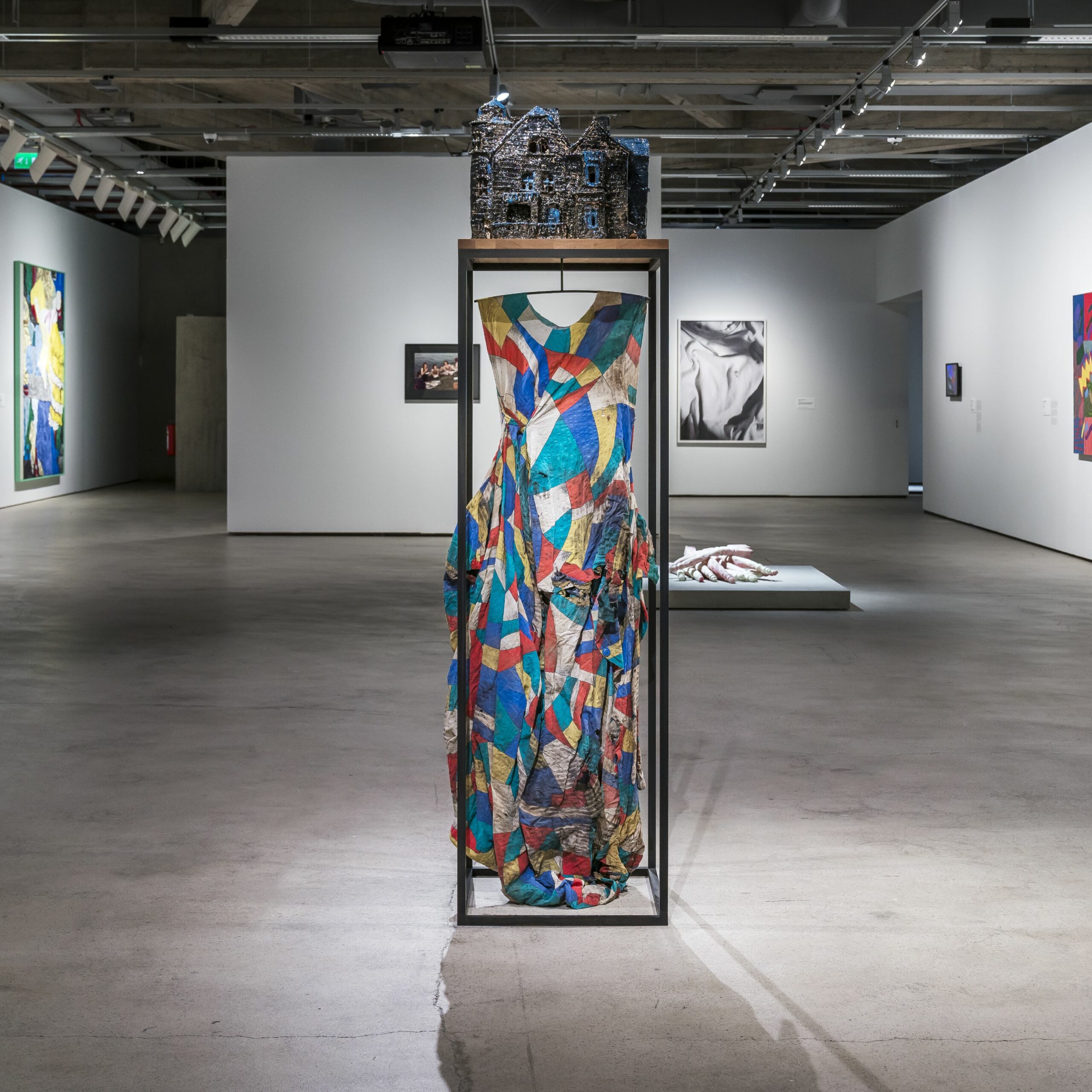
Disco Ofelia and Eleuter House (after Jarosław Iwaszkiewicz) (2019) is from a series of sculptures created in collaboration with fashion designer Michał Wiśniewski, whose garments were first buried, then unearthed, and finally shaped into sculptures. Paulina Ołowska (b. 1976) seeks to shake up the conventional ways in which women are represented in art. She sums up her thoughts by asking: “Once you have grown into womanhood, how do you defend or preserve your freedom to be the woman you want to be?” The theme was inspired by Simone de Beauvoir’s 1967 book La femme rompue (The Woman Destroyed), which reflects on women’s lives, ageing and societal expectations through the stories of three women.
Pindell, Howardena
Untitled #106

Howardena Pindell (b. 1943) began making collages in the 1970s using hole-punched dots of coloured paper, transforming a routine, utilitarian process into a rich aesthetic language. At the time, she was breaking ground as the first African-American curator at The Museum of Modern Art in New York. The varied sizes and arrangements of the paper dots can be seen as reflecting on the dynamic between the individual and the collective. The collage references the artist’s personal experiences of racial and gender discrimination within the predominantly white art world, while also engaging with the broader themes of archiving, bureaucracy, and institutional structures.
Singh, Dayanita
Mona and Myself
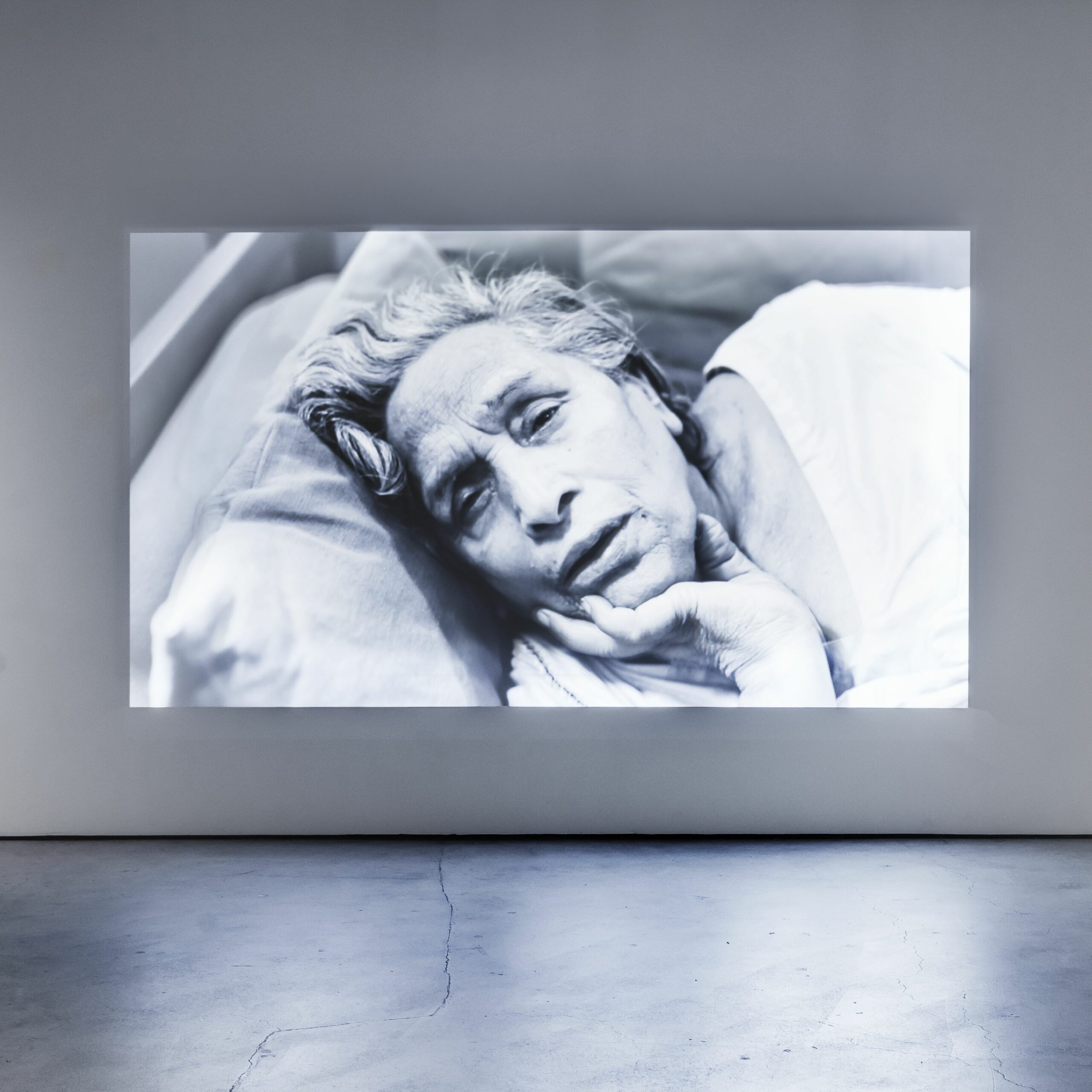
Dayanita Singh (b. 1961) is an artist primarily working in photography based in Delhi, India. Mona and Myself (2019) is what Singh calls a ‘moving still image’ of the artist’s lifelong friend Mona Ahmed, who passed away in 2017 and appears in hundreds of Singh’s photographs. Singh says that her relationship with Mona Ahmed is captured poignantly in this video, which came about by chance during a photo shoot. Unlike photographs, the video conveys their bond also through music and the sound of their breathing. Singh has published fourteen photobooks, one of which is an intimate portrait of Mona Ahmed’s extraordinary life living in New Delhi in the 1990s.
Syms, Martine
The Fool
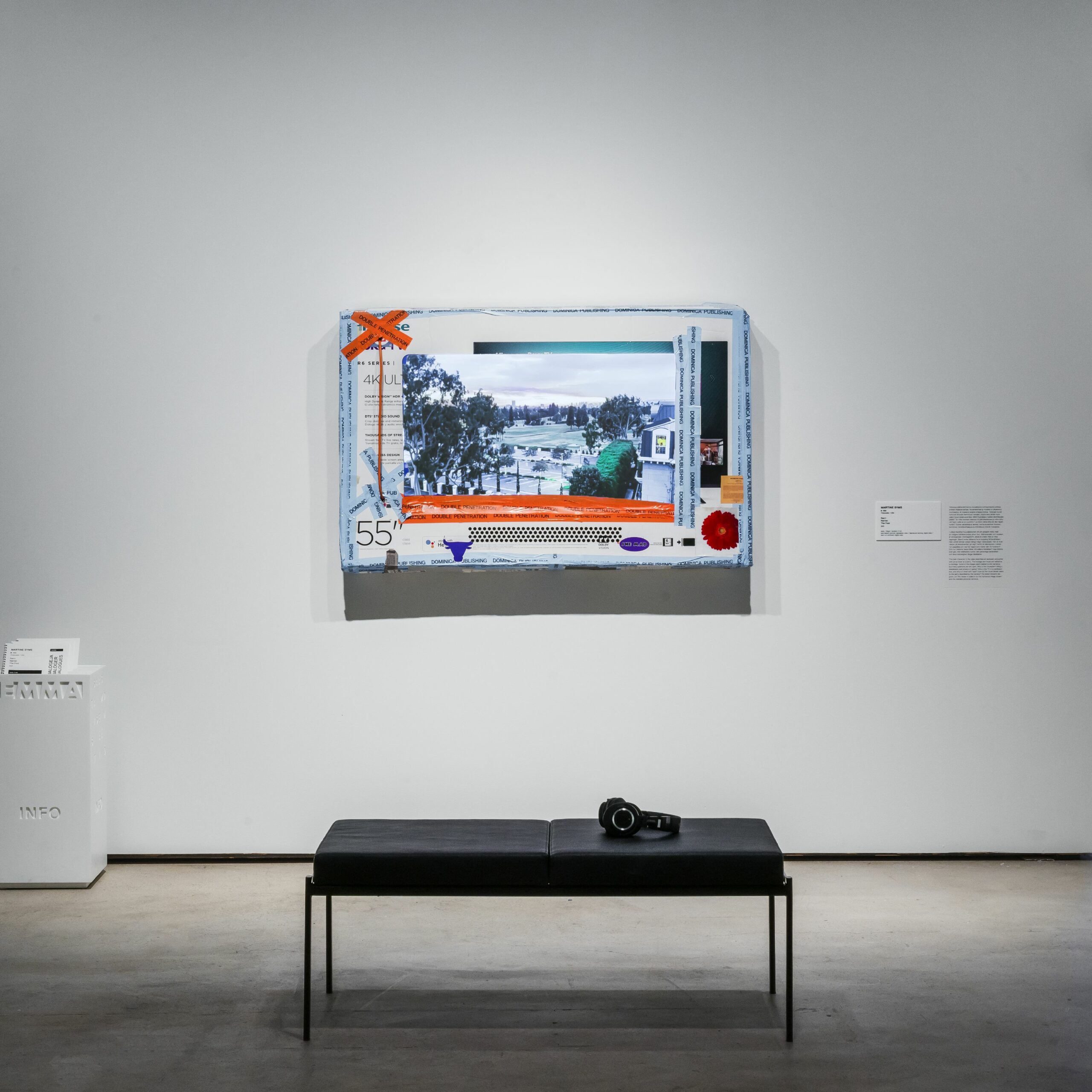
In the video work The Fool (2021) by Martine Syms (b. 1988), the main character describes an awkward encounter with an ex-lover at a party. The footage and music are edited as a condensed montage. Some of the images seem related to the narrative, but many questions are left open. Why is the houseplant riding a skateboard, and where is it going? Why is the TV in a cardboard box, and why is it lined with tape? How do the visual details relate to the party described by the narrator? No direct answers are given, but the viewer is pulled in by the humorous image stream and the relatable personal narrative.
Thao Nguyen, Phan
On illusion

South East Asian modernist architecture is a major source of inspiration for Thao Nguyen Phan (b. 1987). The Solar Noon series is the artist’s response to modernism in her country Vietnam and the situation of the Global South: she extracts from their original context architectural models such as the concrete breeze-soleil louvres, adapted to humid and tropical climates, in a delicate pictorial gesture on silk. On illusion (2022) takes elements from the Independence Palace in Ho Chi Minh City and the Institute of Foreign Languages in Phnom Penh.
Vallasjoki, Toni
Calendar

Vallasjoki’s (b. 1984) work often engages with the experience of time and the human relationship to space. In Calendar (2024), he explores his personal perception of time and conventions of timekeeping. The installation evolves daily over the course of the exhibition, as museum guards move a symbol from one panel to the next each morning. As its title suggests, Calendar echoes the structure of a traditional calendar, yet its symbols and imagery allude to broader conceptual frameworks beyond just timekeeping.
Media space

Cao Fei: COSplayers (2004)
15.4.2026–16.8.2026
COSplayers showcases young people who have grown up immersed in the world of video games from an early age. In the work, they dress as fantasy characters and move through mundane spaces as if inhabiting a parallel reality. We see them standing in industrial zones, wastelands and between apartment blocks like heroes lost in the wrong world. The work shows how subcultures offer a means of escaping the pressures of everyday life and environments where one does not feel a sense of belonging. At the same time, it reveals how role-playing can momentarily transform ordinary places into something new.
Cao Fei is a Chinese contemporary artist whose work explores the impact of globalisation, virtual worlds and youth culture on identity. She works with video, photography, installation and performance.
The high-tech media space, with its immersive sound system and 4K projection, showcases new acquisitions of media art featured in the Saastamoinen Foundation collection exhibition.
EMMA Zone

EMMA Zone is the digital home of EMMA. The site offers a variety of content about art, design and the museum’s work under four categories: Thinking Zone, Behind the Scenes at EMMA, Bubbling Under and Children’s Art Questions.
Content about the Dialogues exhibition:
Artist interview | Emilia Tanner: Beneath the Surface of Paper
Artist interview | Sinikka Kurkinen: A Colour Painter in the Grand Style
Artist interview | Aura Saarikoski: Autobiographical Elements in Photography
EMMA Zone – always open for art!